I first went to Australia in 1999 to intern in the Federal Parliament in the office of the Shadow Attorney-General, Robert McClelland. Over the course of three months, I researched the politics of the 1999 republic referendum and wrote an article about why voters rejected the proposal. As a poor graduate student without a car, I spent all of my time in Canberra, with the exception of one weekend trip to Melbourne.
Gus’ Café in Civic became the center of my social life. I didn’t go there to work. I went there to eat, drink coffee, and meet friends — frequently enough to become a regular. In a time before smartphones made it easy to stay in touch with home, Gus’ gave me a much-needed sense of community. It also introduced me to smashed avocado toast, pumpkin soup, and really good espresso-based coffee.
When I returned to Austin, I found nothing to replace Gus’ Café. Austin had coffeehouses, and some of them made a decent espresso, but they were places to study or stay up late. In terms of food, they offered little more than pastries or bagels. Austin also had brunch spots, but these were diners with drip coffee. You could get brunch, or you could get an espresso, but not both in the same spot. And neither the coffeehouses nor the diners were culturally embedded as places where people went to socialize with their friends. Although Starbucks had arrived in Austin in 1995, it was not offering the same experience as Gus’ in Australia.
The same could be said for New York City. After my Australian friends visited in the early 2000s, they shared with me stories about Little Ruby’s, an Australian café in the Nolita neighborhood opened by an Australian. It was the only place in the city, they said, where you could get a good coffee.
I returned to Australia frequently over the following years, including a six-month stay in Canberra as a graduate student, during which time I reprised my role as a regular at Gus’. As I traveled around the country, I found cafés like it everywhere I went — excellent espresso coffee alongside inventive breakfasts made with fresh ingredients and infused with dishes and flavors from around the world. In the US, cafés like these were the exception, but in Australia, they seemed to be the rule. They set my standard for breakfast and coffee.
Whenever I travel, I always try to find accommodations near a café that can deliver my caffeine fix and a reliably good breakfast. I am not an unadventurous eater — I look forward to the local food wherever I go — but I love to start my day with coffee and breakfast, and that combination, especially at an early hour, is not always easy to find.
In planning a trip to Amsterdam for a conference in 2018, I landed on the website of Box Sociaal, which looked exactly like what I was after. Turns out it had been deliberately founded as an Australian café. I visited twice, and it delivered in terms of the quality of the coffee, the food, and the “vibe.” At the time, I did not stop to ask why there was an Australian café in Amsterdam any more than I had wondered why there was one in New York.
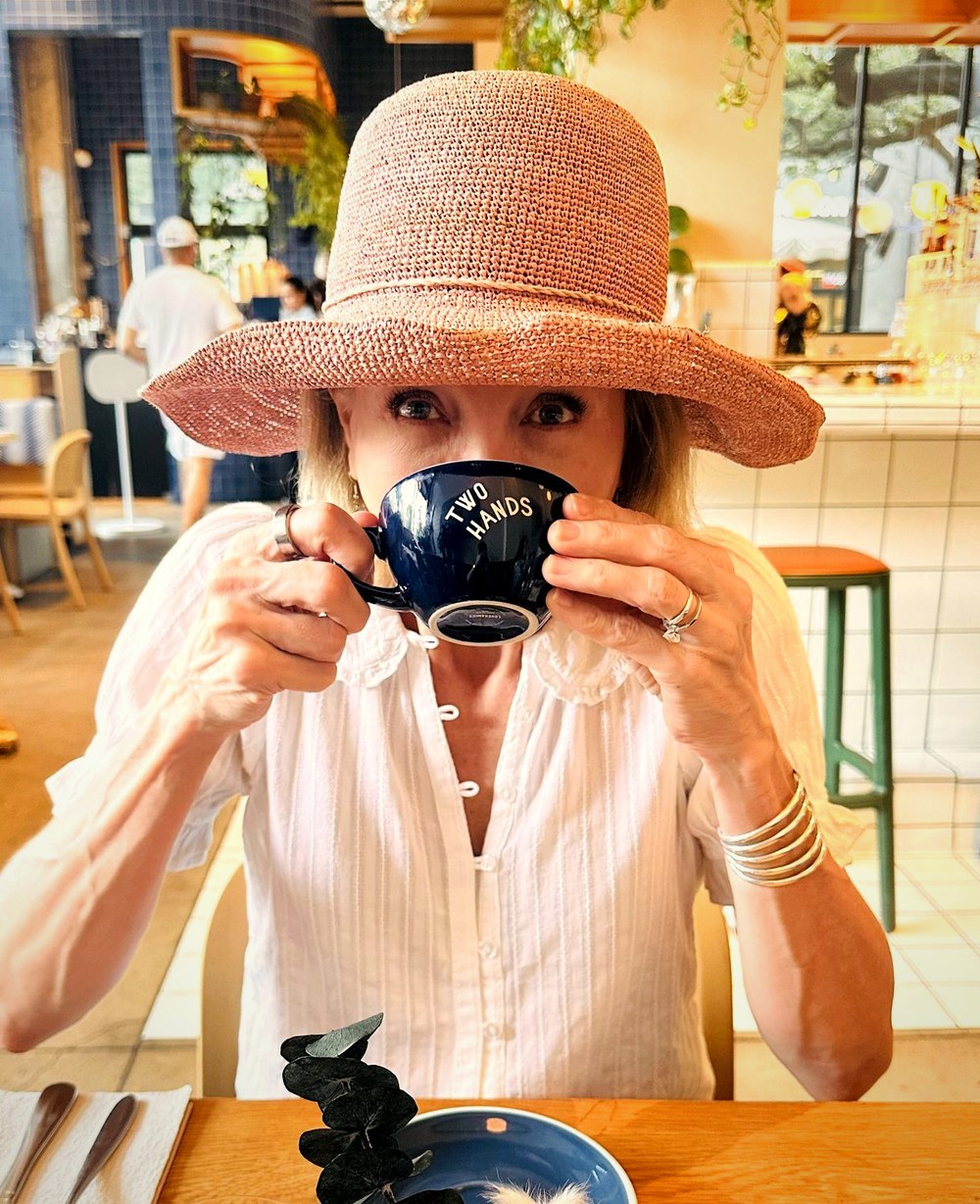
It was only in 2023 when I learned that an Australian café had opened in my own backyard that I started asking questions. Proud Mary arrived in Austin in 2022, from Melbourne by way of Portland, and I thought: what is going on? Digging a little deeper, I realized Proud Mary wasn’t Austin’s first. Two Hands Café had beaten it by two years, without my noticing.
This phenomenon, I decided, was worth investigating, and I began mapping Australian cafés in the United States. Meanwhile, Citizens All Day arrived in Austin in 2025, and Black Fox, a coffee shop rather than a full café, the following year — by which time I had built a dataset of 700 cafés around the world.